Draughtsmen · Plate 02
The Most-Quoted Political Cartoon in English
James Gillray's The Plumb-pudding in Danger (1805) — its composition, its targets, and the two-century reproduction chain that made it ubiquitous
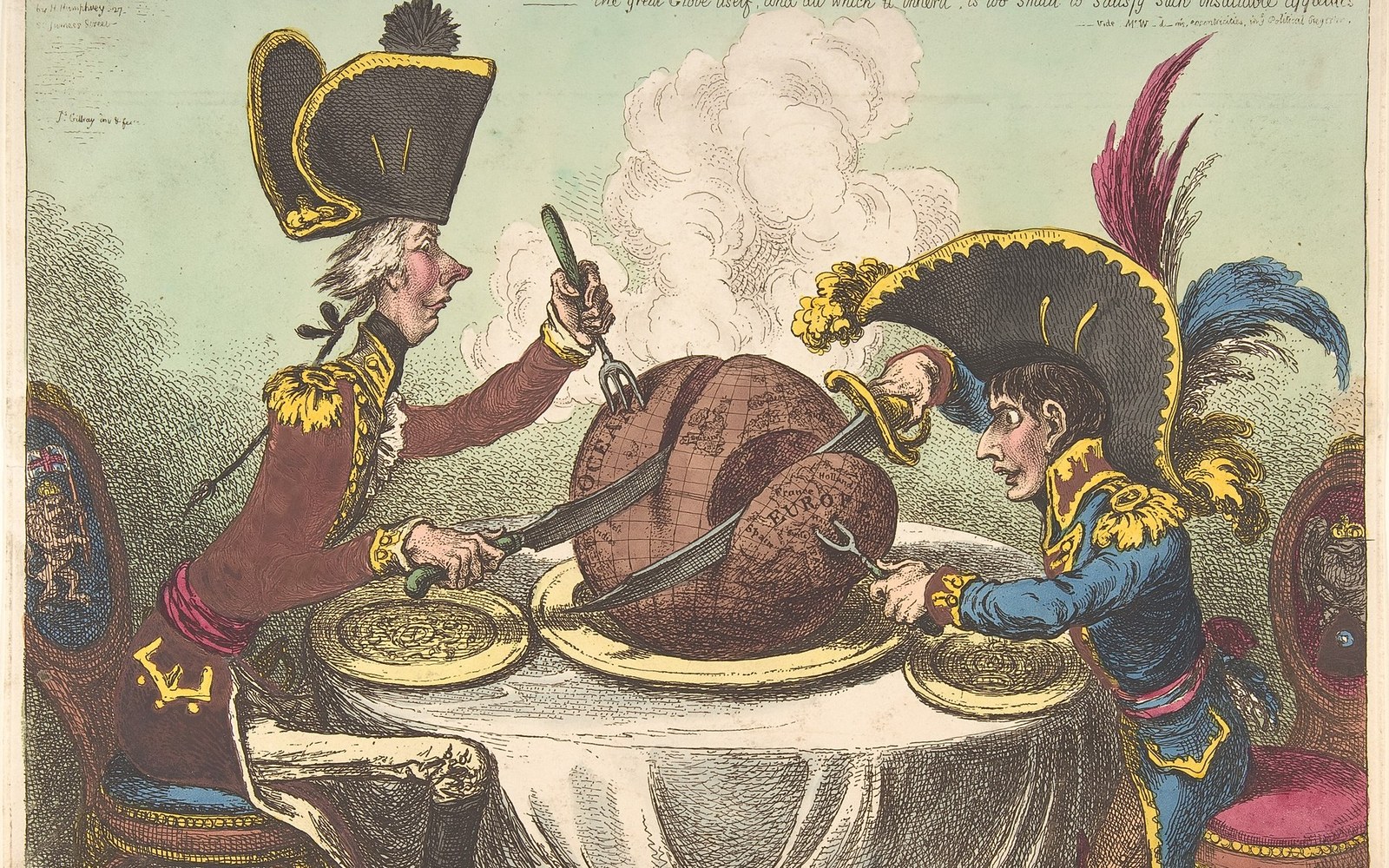
Pitt takes the ocean, Bonaparte takes Europe, and the tablecloth is the only thing in the room at peace.
Photo: The Plumb-Pudding in Danger;–or–State Epicures Taking un Petit Souper MET DP809028 · Wikimedia Commons
A Steaming Globe, Two Carving Knives
On 26 February 1805, the London print publisher Hannah Humphrey issued a hand-coloured etching from her shop at 27 St. James's Street. The image showed two figures leaning across a small table, carving up an enormous plum pudding that was, in fact, the globe. William Pitt the Younger gripped the ocean: a wedge of dark blue sea marked "Ocean" fell under his knife, labelled with the word "British." Across the table, Napoleon Bonaparte — tiny, beetle-browed, his hat barely clearing the table's edge — sliced continental Europe, his fork already stabbing deep into what the etcher had marked as a share of roughly half the civilised world. Steam rose from the pudding. Both men's expressions combined greed and satisfaction. Nobody, in this image, was the good guy.
The etcher was James Gillray, and the plate he drew and bit was copper. Gillray worked in etching rather than the more laborious copperplate engraving, drawing his design in reverse on a wax-stopped plate with a steel needle, then lowering it into an acid bath to eat the lines. The resulting impression, wiped clean and printed on dampened laid paper, was then passed to Hannah Humphrey's colourists, who applied watercolour washes — the vivid scarlet of Bonaparte's coat, the blues of the ocean, the amber of the pudding's crust — in the standard hand-colouring practice of the Georgian satirical print trade. First-edition impressions went into the shop window; curious Londoners crowded outside to see.
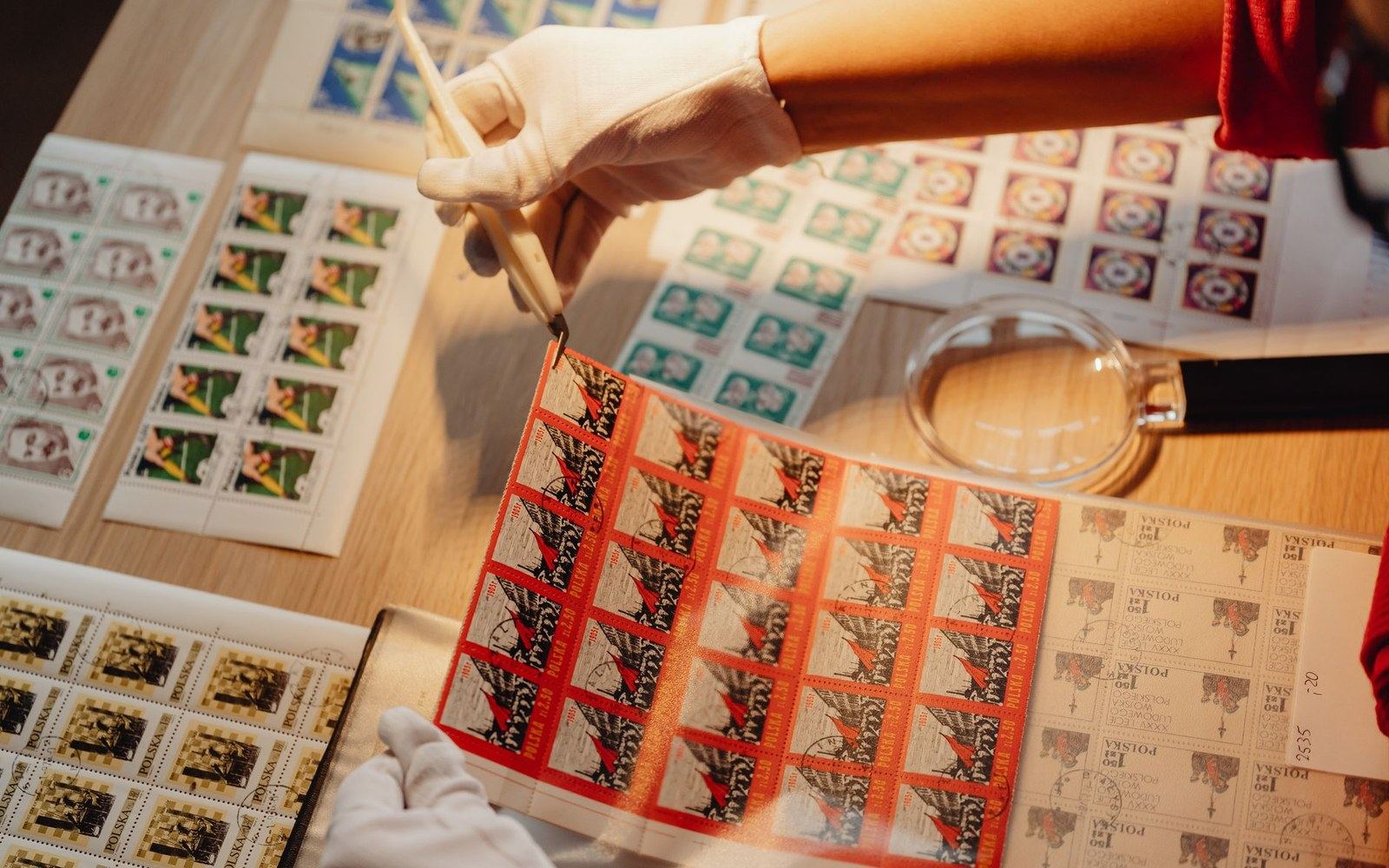
Hand-colouring was piecework paid by the dozen sheets, so no two impressions of one plate match.
Photo: Kaboompics / Pexels
Why These Two Men, Why This Moment
The political context was specific: the Peace of Amiens had collapsed in 1803, Britain and France were again at war, and a negotiated partition of European and maritime power was exactly what neither government was willing to admit to wanting. Gillray's genius lay in collapsing geopolitics into appetite. Pitt had returned to office in 1804 after several years out; Napoleon had proclaimed himself Emperor that same year. The pudding metaphor drew on an existing English idiom — "plum pudding" as collective national prosperity — and weaponised it as a literalised metaphor for imperial division of spoils. The joke required no caption beyond the title. Both figures were already caricature staples: Pitt's gaunt face, long nose, and angular frame had been fixed by Gillray across a decade of prints; Napoleon's shortness and outsized hat had become the visual shorthand for French ambition across all of Europe's satirical presses.
What made the image endure beyond the season was its formal economy. Most Georgian satirical prints were crowded: texts scrolling from mouths, inscribed banners, heraldic flourishes, subsidiary figures jostling the edges. The Plumb-pudding in Danger places only two figures and one object on an otherwise empty field. The composition has the clarity of an emblem: viewer comprehension is immediate, and the meaning survives reproduction at any scale, including postage-stamp and thumbnail. That optical robustness has made it print-ready in every era from woodcut reproduction in Victorian schoolbooks to digital JPEG on editorial pages.
Chronology of reproduction
- 1805first impressions issued at Humphrey's shop; hand-coloured copies circulate in London
- Mid-19th centuryVictorian encyclopaedias reproduce via wood engraving
- 1880s onwardzinc line block enables closer facsimiles in print histories
- 20th centuryphotographic reproduction in monographs, textbooks, and newspaper features establishes its canonical status
- Presentpublic-domain digital scans circulate freely; default illustration for Napoleonic-era political commentary
The Plate, the Archive, the Reproduction Chain
Impressions of the print are held by the British Museum ↗, which acquired them as part of the vast Gillray holdings that entered the collection through the nineteenth century. The Museum's Department of Prints and Drawings holds multiple impression states; the British Museum's online collection record ↗ documents the etching's dimensions — approximately 26 by 36 centimetres on the plate — the publication line, and the impression accession history.
Reproduction rights and photomechanical copies spread the image across the nineteenth century by routes that were effectively uncontrolled. Victorian encyclopaedias reproduced it by wood engraving, inevitably softening the bitten line into engraved approximation. When the zinc line block replaced wood engraving from the 1880s onward, photo-transfer gave a closer rendering of Gillray's actual line quality, and the image appeared in histories of caricature, collected volumes of British satire, and newspaper anniversary pieces with increasing frequency. By the mid-twentieth century it had become the default illustration for any text about Anglo-French rivalry, the Napoleonic era, or political cartoons in general — a circularity that self-reinforced: the more it was used as an example, the more editors reached for it next time.
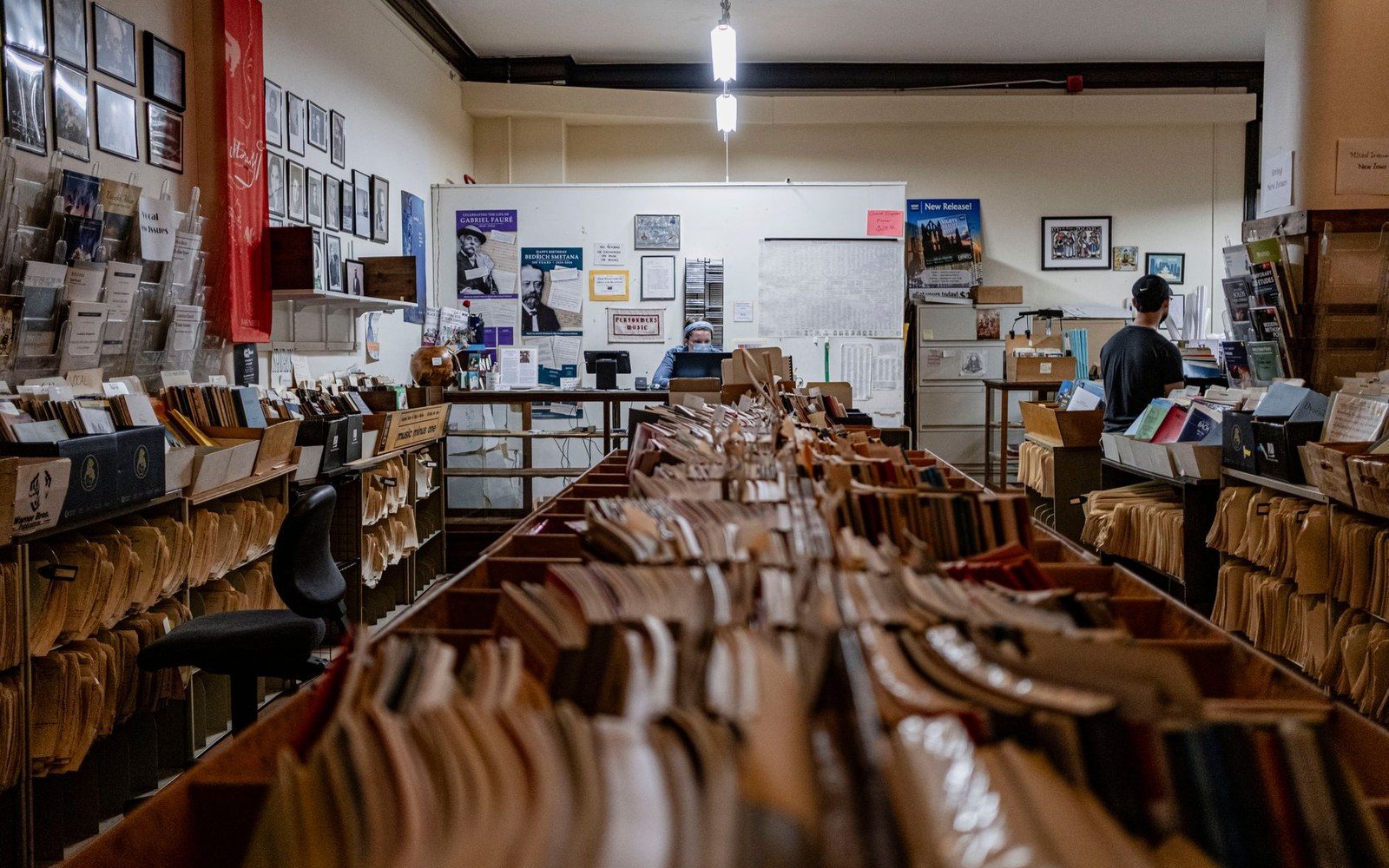
A plan chest holds prints flat and unfolded, which is why a sheet pulled in 1805 still lies straight.
Photo: Sydney Sang / Pexels
The Library of Congress holds digital scans of impression copies in American collections, and the image figures prominently in the holdings documenting transatlantic exchange of European satirical prints. Its Creative Commons-compatible public-domain status makes it the path-of-least-resistance choice for picture editors and textbook designers alike, a purely administrative factor that has compounded its cultural ubiquity.
What "Most-Cited" Actually Means
No exhaustive count of reproduction instances exists, but the claim rests on observable evidence across reference categories. Political cartoons used as cover images for general histories of British foreign policy in the nineteenth century overwhelmingly favour this print or Gillray's Consequences of a Successful French Invasion (1798). Among Gillray's roughly one thousand published plates, The Plumb-pudding appears in the largest number of independent scholarly monographs, popular histories, and exhibition catalogues surveyed by the British Cartoon Archive, which holds extensive secondary documentation on Gillray's reception history at the University of Kent, Canterbury.
The image has been invoked explicitly to frame twentieth- and twenty-first-century geopolitical situations by commentators who want a single image to carry the idea of great-power carve-up: interwar European partition, Cold War sphere-of-influence arguments, post-Soviet spheres. In each case the reproduction has served partly as decoration and partly as historical legitimation — a reminder that the problem is old enough to have been satirised on copper. That recursive function, where a satirical image becomes the proof-text of a recurring pattern, is the mechanism by which one print escapes its original context and achieves something close to iconographic permanence.
Gillray produced the plate in a single working session, almost certainly. It was one of several dozen he completed that year. He could not have known it would outlast everything else on that week's shop window. What he did know — and what the plate demonstrates with axiomatic confidence — was how to collapse an argument to its essential geometry and hold it there, undeniable, in bitten copper.