Draughtsmen · Plate 01
Hogarth Sold It by Subscription
How a copyright act and a direct sale changed who controlled the satirical print. Hogarth's 1735 Act gave engravers fourteen years of protection.
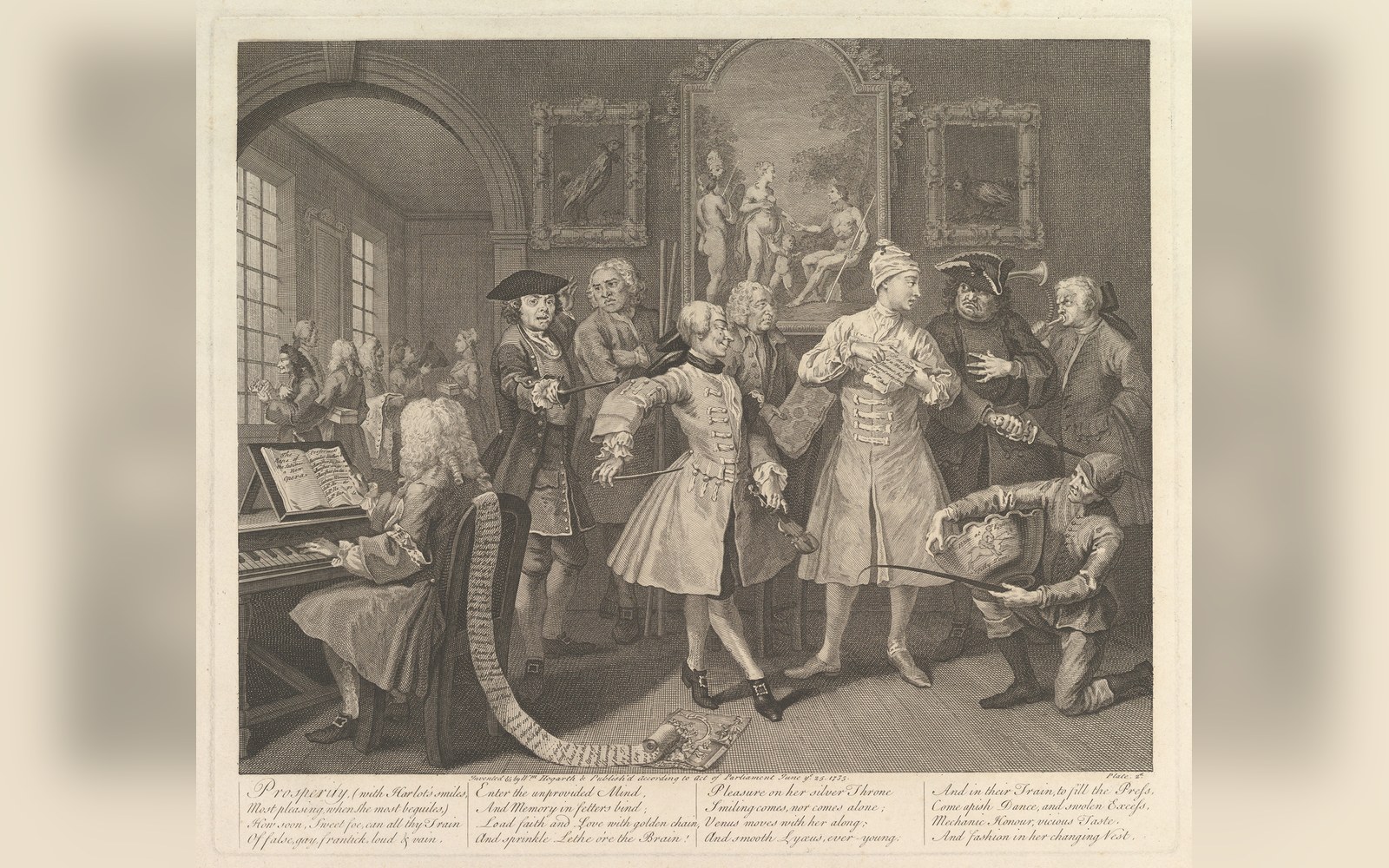
Plate two of the series a subscriber had already paid for before a single impression was pulled.
Photo: A Rake's Progress, Plate 2 MET DP825208 · Wikimedia Commons
When William Hogarth opened the subscription for A Rake's Progress in 1733, he was doing something more deliberate than selling pictures. He was demonstrating that an engraver could own his work, distribute it on his own terms, and keep the profits — without surrendering a sheet to the established print publishers who had cheerfully pirated his earlier series.
The eight plates of A Rake's Progress follow Tom Rakewell from inherited fortune to Bedlam, and Hogarth had etched and engraved them himself on copper. The technique — intaglio, ink held in incised lines bitten and cut into the plate — gave each impression a tonal richness that no cheap woodcut could replicate. A single copper plate could yield several hundred good impressions before the lines wore soft enough to require burnishing and reworking. Hogarth's subscribers paid in advance, collected their prints on a fixed date, and received something with the imprimatur of the artist's own workshop rather than a pirate's press.
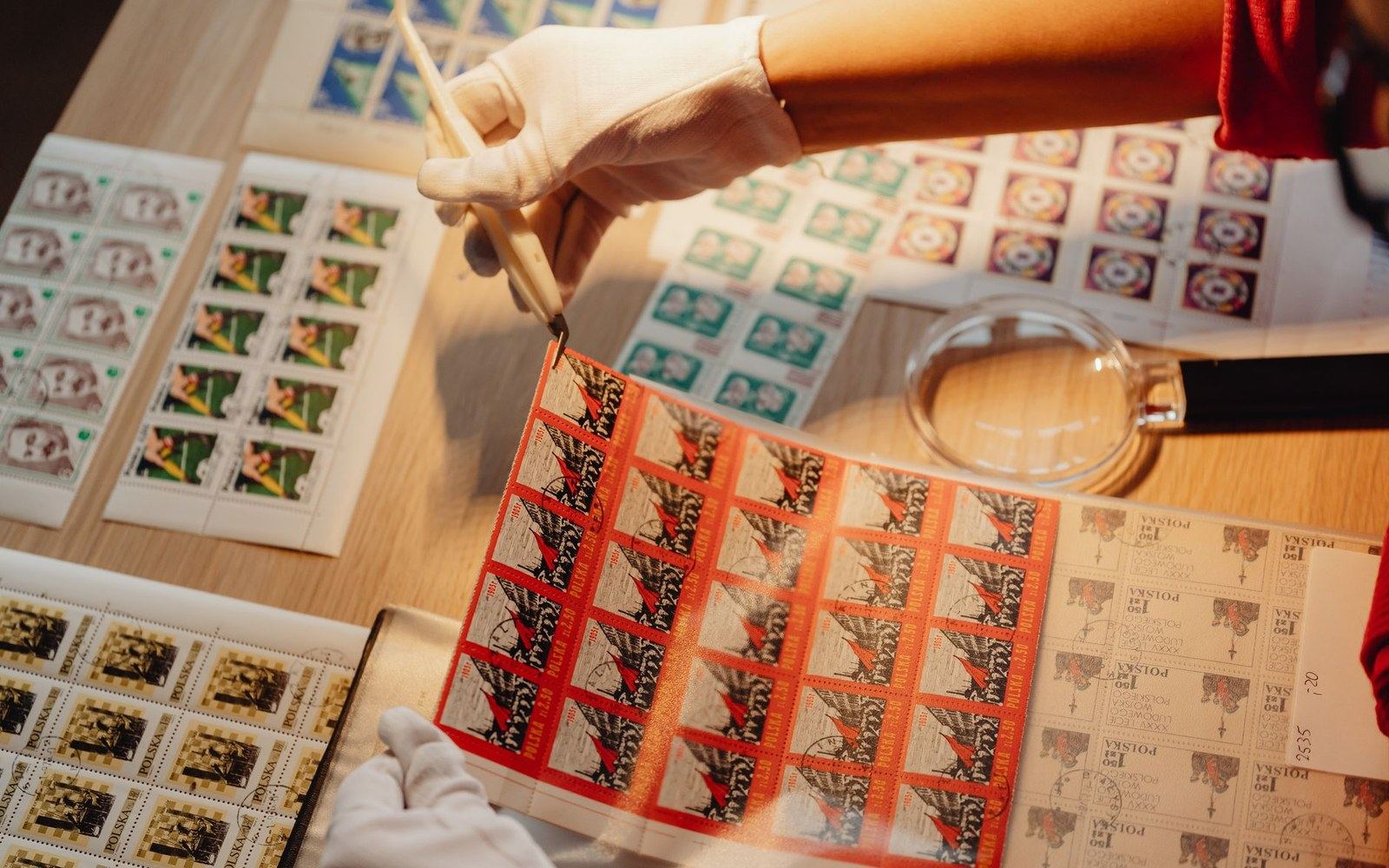
Hand-colouring was piecework paid by the dozen sheets, so no two impressions of one plate match.
Photo: https://kaboompics.com/ / Pexels
The Engravers' Copyright Act and what it actually said
The timing was not accidental. Hogarth had lobbied Parliament directly, and the Engravers' Copyright Act — formally the Engraving Copyright Act 1735 — received royal assent on 25 June 1735, the same year he released the Rake's Progress subscription. Before the Act, prints occupied a legal blind spot: the Statute of Anne of 1710 protected books, but a copper engraving was not a book. Competitors could copy a successful print and sell it within days of the original going on sale. Hogarth had watched this happen to A Harlot's Progress (1732), which was pirated almost immediately. The 1735 Act gave engravers fourteen years of protection over their own designs, making unauthorized copying a statutory offence.
The legislation is sometimes called "Hogarth's Act" because of his role in agitating for it, and the description is fair. He drafted petitions, gathered signatures from fellow engravers, and made the political case in person. What he secured was not merely a personal advantage: the Act established for the first time that the visual artist, not the publisher or the print-seller, held the primary right in a reproductive image. That principle would take more than a century to work fully into English law, but 1735 fixed its origin.
Chronology
- 1710Statute of Anne extends copyright to books, not prints
- 1732A Harlot's Progress pirated almost immediately after publication
- 25 June 1735Engraving Copyright Act receives royal assent
- 1735A Rake's Progress released to subscribers under new legal protection
Subscription as independence
The subscription model Hogarth used was not new — books had been sold this way throughout the early eighteenth century — but its application to a series of satirical engravings had particular consequences. By taking money directly from buyers before publication, Hogarth eliminated the print-seller as intermediary and gatekeeper. He set the price. He controlled the release date. He determined how many impressions to pull and when to close the plate.
This mattered beyond commercial arithmetic. The political and moral content of Hogarth's work — the corrupt magistrate, the dissolute heir, the venality of every institution Rakewell touches — was the kind of material a cautious publisher might soften or refuse. Direct subscription removed that pressure. It also created a relationship between artist and audience that was legible and documented: the subscriber list was a social record as well as a sales ledger.
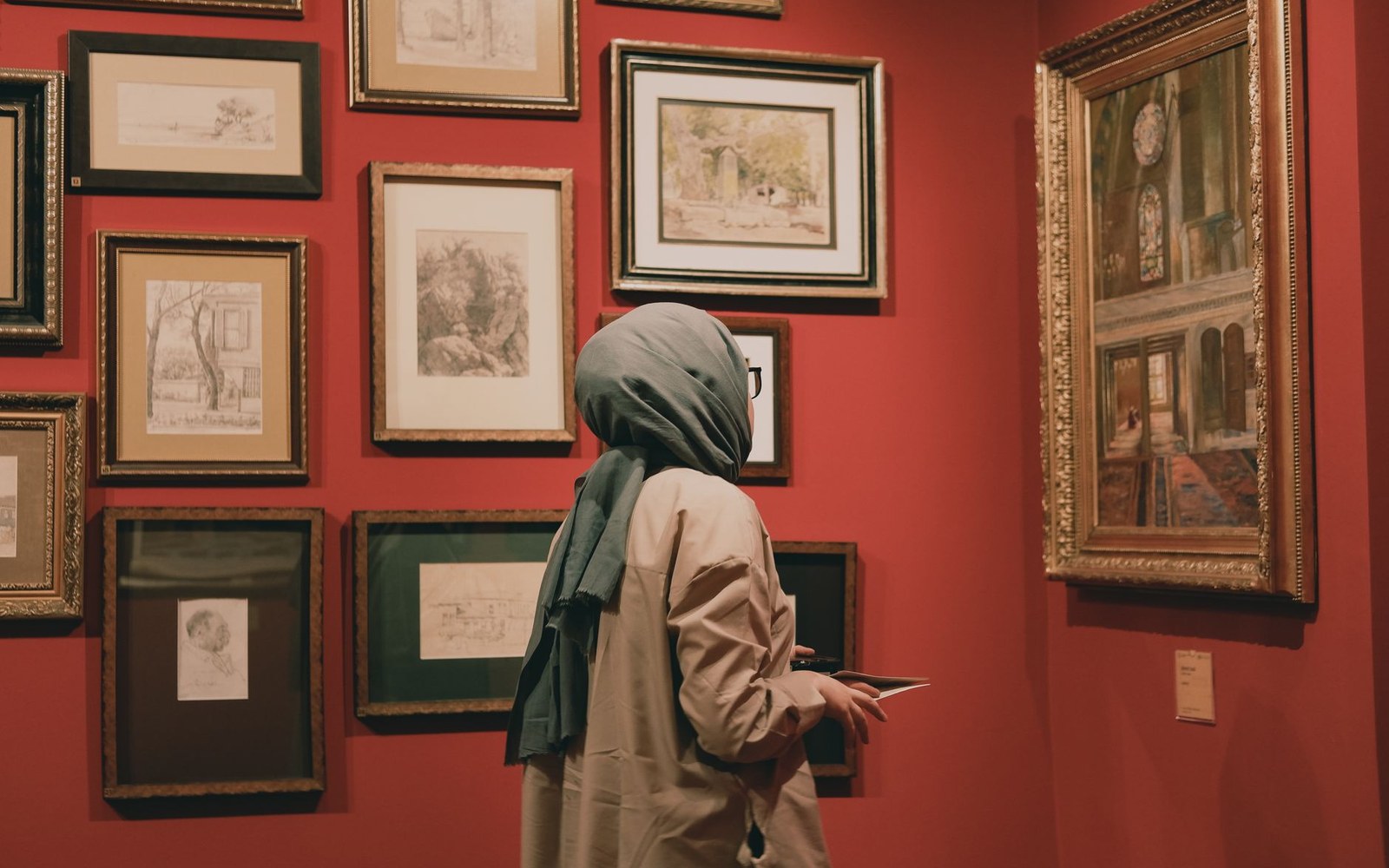
Framed on a wall a wood engraving is an object. On the page it was one week’s argument.
Photo: Beyzaa Yurtkuran / Pexels
The British Museum holds a substantial collection of Hogarth's prints ↗, including impressions from the Rake's Progress plates at different stages of wear, which makes it possible to trace the sequence of printings and assess how Hogarth managed the plates across their working life.
The independence Hogarth established in 1735 set a template that later cartoonists adapted as printing technology changed. James Gillray published through Hannah Humphrey's shop rather than by subscription, but he too maintained unusual control over his plates. The logic Hogarth had demonstrated — that the maker of a satirical image should govern its reproduction — never quite disappeared from the trade. It reappears, in different forms, in every subsequent argument about who owns a political cartoon and who decides when it runs.