Printing · Plate 01
What Gillray's Printer Did Before the Ink Hit Paper
The copper plate as the cartoonist's battlefield
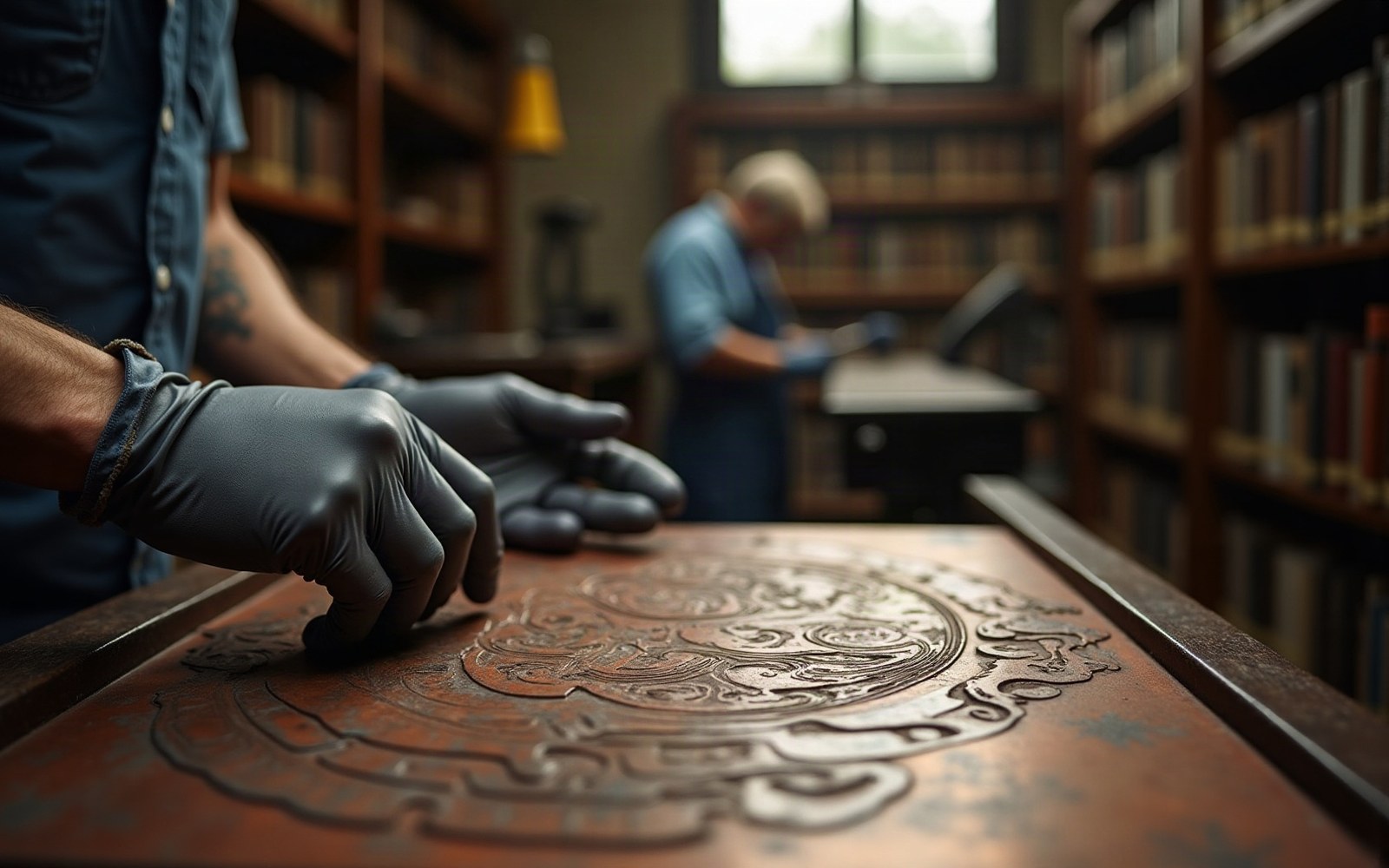
The burin removes metal; the acid does the rest. Both leave a line no pen can imitate.
Georgian satirical prints look, from a distance, like spontaneous outbursts — the crammed imagery, the serpentine captions, the grotesque faces. They were anything but. Before James Gillray's savage likenesses reached the print-shop window at Mrs. Humphrey's in St. James's Street, each one had passed through a sequence of controlled physical operations that demanded as much discipline as invention.
The foundation was copper. Engravers and etchers of the period worked on plates of rolled copper, polished to a near-mirror surface so that any flaw in the metal would show in the printed impression. For etching — Gillray's preferred technique, and Thomas Rowlandson's — the first stage was the application of an acid-resistant ground: a compound of wax, asphalt, and resin, applied warm and smoked over a candle flame until the surface darkened to an even brown-black. This ground was the cartoonist's drawing surface. Working with a steel needle, the artist drew freely through it, the needle's tip exposing bare copper wherever it traced a line. The pressure required was slight, closer to writing than to the muscular work of engraving. This gave the etched line its characteristic spontaneity — a quality Gillray and Rowlandson both exploited, though toward entirely different ends.
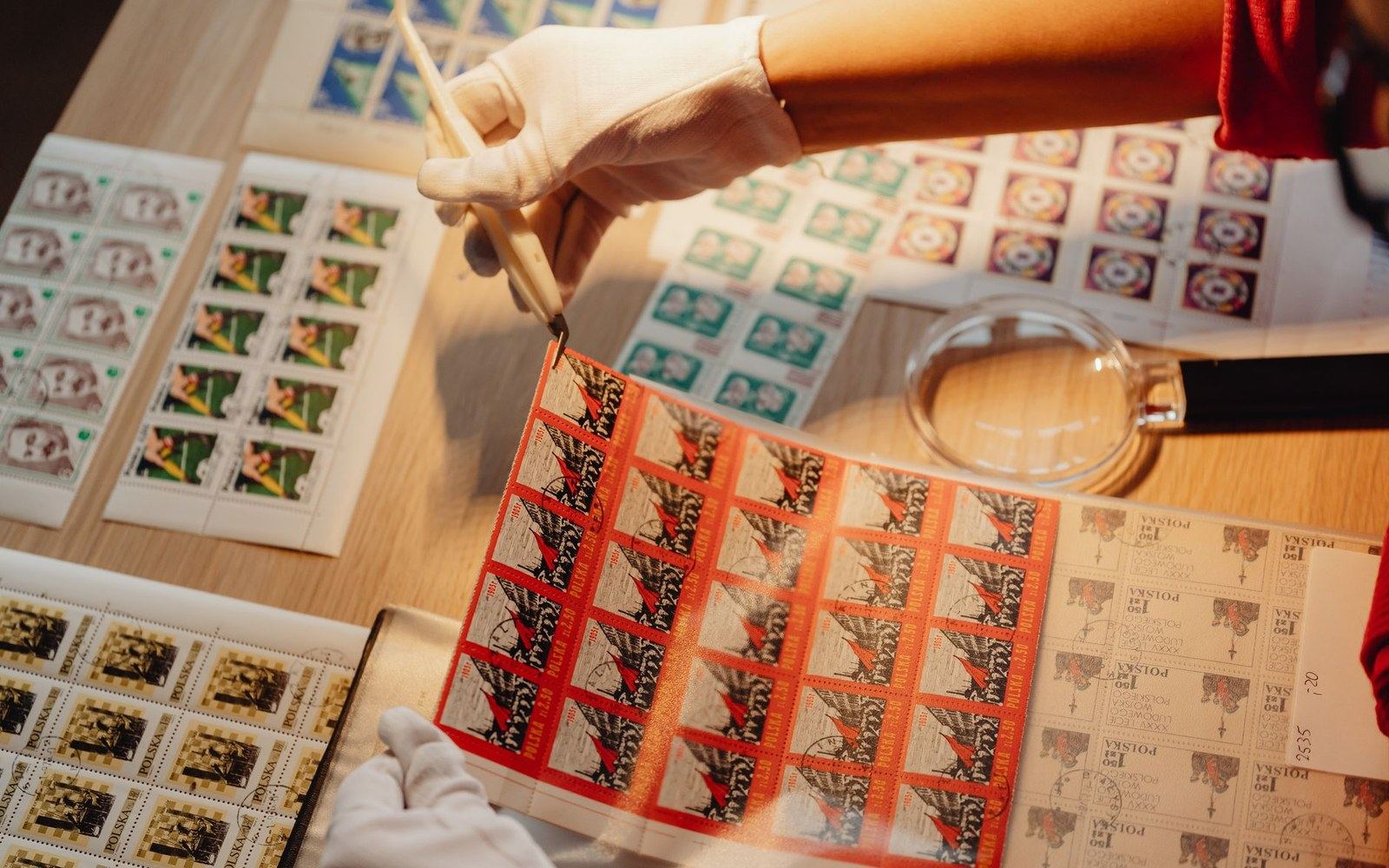
Hand-colouring was piecework paid by the dozen sheets, so no two impressions of one plate match.
Photo: https://kaboompics.com/ / Pexels
Once the drawing was complete, the plate was immersed in a bath of dilute nitric acid — the mordant (etching acid), the term borrowed from French trade practice. Acid attacked the exposed copper, biting the lines into the plate. The depth of the bite, and therefore the weight of the final printed line, was controlled by timing: the plate might be removed from the acid, dried, and stopped-out with varnish in stages, protecting lighter areas while deeper lines continued to bite. Gillray's complex tonal passages — the rolling folds of a politician's jowl, the cross-hatched shadow beneath a ministerial wig — were built up through multiple biting sequences, each requiring the printmaker to read the plate's progress under raking light.
Engraving — in which a hardened steel burin cut lines directly into the copper without acid — was used by Gillray for finishing and reinforcement, the two techniques often combined on a single plate. The copperplate engraving tradition carried into Georgian satire from reproductive print-making, and the distinction between a pure etching and a worked-over plate was rarely visible in the final impression. What the eye registers is quality of line; how that line arrived on the copper was the printmaker's private business.
Stages of production
- Acid-resistant ground applicationthe wax, asphalt, and resin coat laid before needle-drawing
- Needle drawingthe stage at which the cartoonist's image was made on the grounded plate
- Mordant baththe acid-biting stage that cut lines into the copper
- Stopping-outvarnish applied between biting stages to control tonal depth
- Burnishingpolishing out errors or altered political targets
- Plate printinginking, wiping, and pressing the plate onto dampened rag paper
- Hand-colouringwatercolour washes applied by workshop colourists from a master copy
Errors and afterthoughts were addressed by burnishing: a hardened steel tool, smooth and rounded, was rubbed over the unwanted lines until the compressed copper obliterated them. The plate could then be re-worked. Gillray's plates, several of which survive in the collections of the British Museum ↗, show evidence of multiple burnishing episodes — captions altered, likenesses refined, targets changed as political circumstances shifted before publication.
The colourists and the economics of finish
Printing from the inked plate — wiped across its surface, then forced into the bitten lines under the pressure of the rolling press — produced the base impression in black or dark brown ink. That impression, pulled on dampened rag paper, was then passed to colourists. Hand-colouring was applied by teams of workshop workers, often women and children, using watercolour washes mixed to consistent recipes. A popular Gillray plate might need dozens or hundreds of coloured impressions; colourists worked from a master copy, kept beside them as a colour guide, in an assembly-line system documented in period trade accounts held at the British Library. Plain, uncoloured impressions sold for less; the coloured version commanded a premium and was the version most print-shop customers wanted.
The economics shaped the imagery. Gillray and his contemporaries knew their designs would be read at a distance through a print-shop window — Mrs. Humphrey's being among the most prominent venues for public display — and that colour would do much of the argumentative work. The flushed red of a corrupt minister's face, the sickly yellow of a miser, were not decorative choices. They were rhetorical ones, built into the composition from the first needle-stroke on the ground, knowing exactly what the colourist's brush would later deliver.