Papers · Plate 04
Private Eye Has Been Courting Libel Writs Since 1961
Britain's most sued satirical magazine has never missed a fortnight
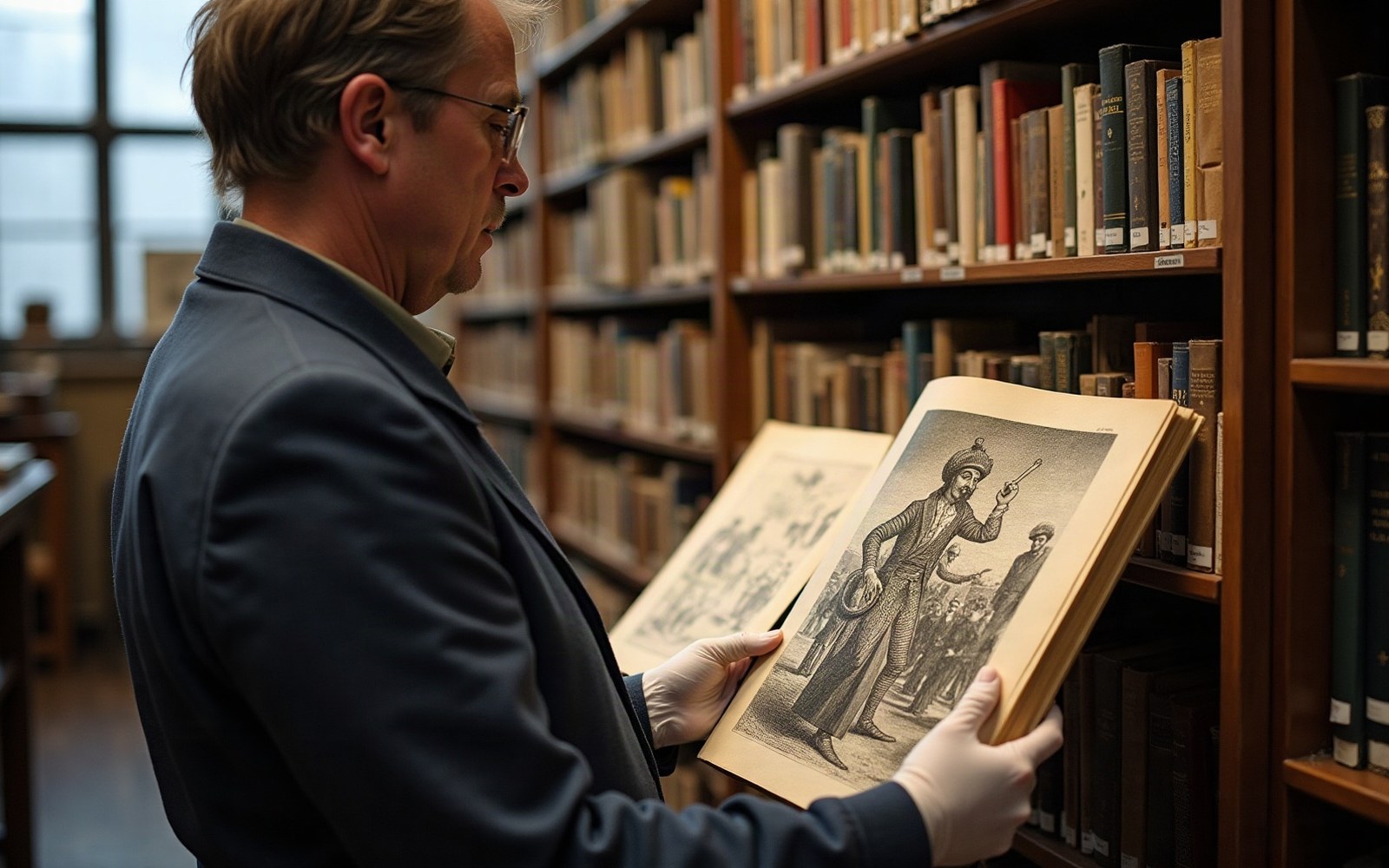
The fortnightly still commissions a drawn cover, which in Europe now makes it unusual.
Private Eye launched in October 1961, produced by a circle of former Shrewsbury and Eton schoolboys who had cut their teeth on school magazines. From the beginning it combined knockabout cartoon covers — speech-bubble gags set over photographed faces — with investigative journalism that Fleet Street was too cautious or too compromised to run. That combination, cheap to produce and expensive in legal consequence, has defined the magazine ever since.
The libel record is substantial. The editor Richard Ingrams, who edited the magazine from 1963 to 1986, presided over repeated actions; the publisher Robert Maxwell, the financier James Goldsmith, and the novelist Jeffrey Archer all pursued the magazine through the courts at various points. Goldsmith's campaign in the late 1970s — simultaneously a civil libel action and a criminal prosecution for criminal libel — was the most serious existential threat the magazine faced. The magazine survived ↗, largely because public sympathy and subscription income moved together.
The large cut ran where a reader opening the issue met it first.
Photo: Christian Wasserfallen / Pexels
The cartoon covers are a distinct form. They are not editorial cartoons in the traditional sense — no artist's interpretive line drawing of a political scene — but photographic appropriations with hand-lettered speech bubbles, a vernacular humour closer to the seaside postcard than to Gillray. Original drawn artwork does appear inside, most persistently in the strips commissioned from cartoonists including Michael Heath and the long-running Grovel and Barry McKenzie pages. Gerald Scarfe and Martin Rowson have both contributed covers and inside pages across the magazine's run.
Ian Hislop, editor since 1986, has overseen the magazine through the transition to a media environment in which fortnightly print satire might have seemed redundant. Instead, the Eye now circulates at figures — around 220,000 copies per issue as reported by the Audit Bureau of Circulations ↗ — that most British magazines do not approach. It remains one of the very few European publications still commissioning political cartoons as a regular editorial commitment rather than an occasional gesture.