Archives · Plate 01
Two Hundred Thousand Originals, and a Reading Room in Kent
The archive that preserved what newspapers threw away
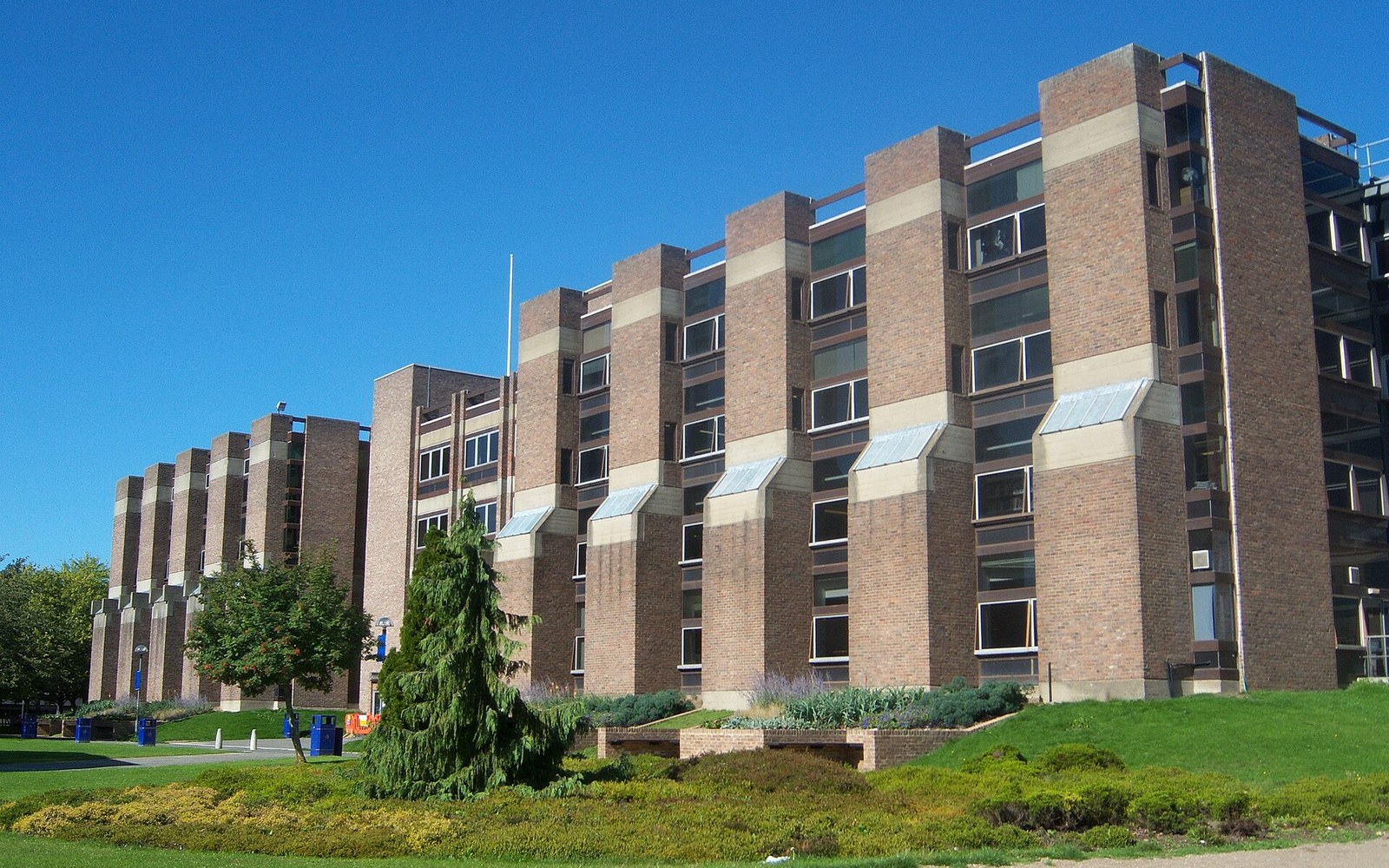
The Templeman Library at Kent, where about two hundred thousand originals are catalogued.
Photo: Templeman Library - UKC · Wikimedia Commons
The British Cartoon Archive at the University of Kent in Canterbury holds more than 200,000 original cartoon drawings — the largest collection of its kind in the United Kingdom and one of the most significant anywhere. For most of the twentieth century, newspapers had no particular reason to keep the artwork their cartoonists delivered: once the plate was made or the photograph taken, the drawing was redundant. The archive exists because a few people decided that was wrong.
The collection's foundation was a 1973 gift from the Evening Standard ↗, whose editors deposited a substantial body of original artwork rather than dispose of it. That early gift set the template — a national newspaper recognising that its cartoonists' drawings belonged somewhere permanent — and the University of Kent formalised the arrangement, building a dedicated research resource around the donated material. David Low, Vicky, and Michael Cummings were among those represented in the early holdings; subsequent acquisitions extended the scope to virtually every significant British editorial cartoonist of the twentieth and early twenty-first centuries.
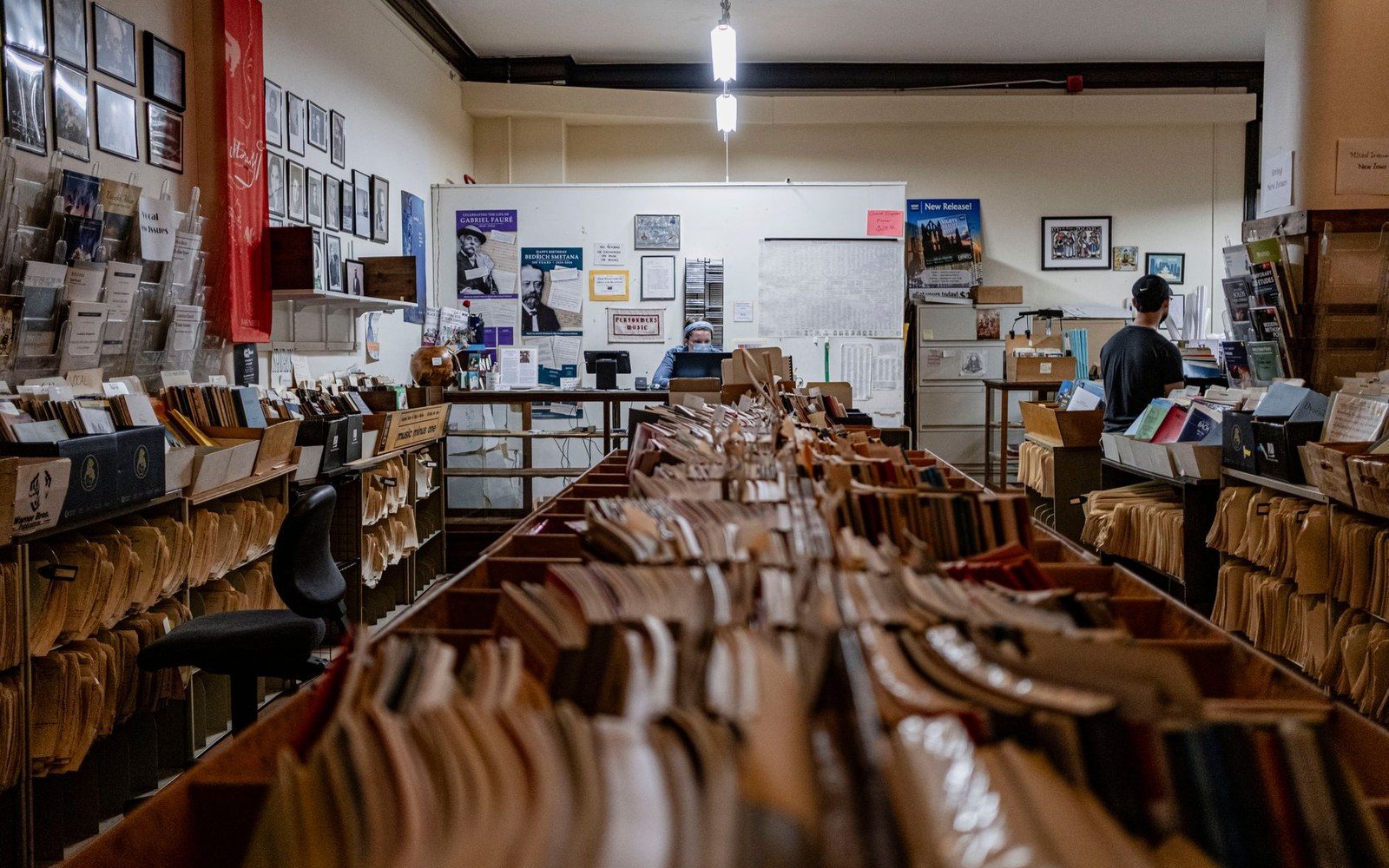
A plan chest holds prints flat and unfolded, which is why a sheet pulled in 1805 still lies straight.
Photo: Sydney Sang / Pexels
The archive now holds work by well over a hundred artists, among them Ronald Searle, Gerald Scarfe, Ralph Steadman, Steve Bell, Martin Rowson, and Posy Simmonds. The material runs beyond finished drawings: press cuttings, correspondence, sketchbooks, and administrative papers are held alongside the artwork, making the collection as useful to press historians and biographers as it is to students of visual satire. Original drawings arrive through donation and occasional purchase; the archive maintains active acquisition policies, meaning contemporary work enters the collection while careers are still in progress rather than after the artist's death.
Cataloguing, access, and what the database holds
The archive's online catalogue, accessible through the University of Kent's library systems, allows searches by artist, publication, date, subject, and named individual depicted. The database is one of the most granular of its kind: a researcher looking for cartoons depicting a specific political figure, or every cartoon published by a given title across a given decade, can usually construct a workable query without arriving in person first. The catalogue carries digitised images of a substantial portion of the holdings, though the quality and completeness of digitisation vary by acquisition batch and by the age of the material.
The large cut ran where a reader opening the issue met it first.
Photo: Christian Wasserfallen / Pexels
Physical access operates through the University of Kent's Special Collections and Archives reading room. Appointments are required; the archive does not operate as a walk-in facility. Researchers may request original artwork for examination under standard archival conditions — pencil only, no bags, supervised handling — and the staff have long experience mediating between the fragility of artwork on paper and the legitimate needs of scholars who want to look closely at an artist's line quality, corrections, or underdrawing. Prints and photocopies cannot substitute for that kind of inspection, and the reading room remains indispensable for anyone working on questions of technique or attribution.
Reproduction rights sit with the individual artists or their estates, not with the archive itself, which means that a researcher wishing to publish an image must identify and approach the right-holder separately. The archive staff can advise on this but cannot grant permission on the artist's behalf. This arrangement is standard across institutional cartoon collections — the Billy Ireland Cartoon Library and Museum at Ohio State University operates on the same principle — and it is worth establishing rights clearance early in any project that will result in publication.
The archive's origins in the press donation model, rather than in systematic state collection, mean the holdings reflect which newspapers chose to engage with the project and which did not. Some titles are well represented over long runs; others appear patchily or not at all. That unevenness is itself historically informative: it maps the degree to which individual editors and publishers valued the artwork their cartoonists produced. The result is not a complete record of British press cartooning, but it is the closest thing that exists, housed on the University of Kent campus above Canterbury's city centre and open to anyone with a genuine reason to look.