Draughtsmen · Plate 10
When the Cartoon Started Moving
A Drawn Argument That Won't Sit Still

The desk where a single panel became a sequence.
Ann Telnaes built her early career on the conventions of the single-panel editorial cartoon — a compressed visual argument, a pointed line, a punchline fixed in time. When she joined the Washington Post ↗ and began producing animated cartoons for its digital platform, she did not abandon those conventions so much as set them in motion. The drawn line, the exaggerated likeness, the rhetorical economy: all carried over. What changed was that the image could now develop, repeat, and undercut itself in sequence.
Telnaes received the Pulitzer Prize for Editorial Cartooning in 2001 ↗, an honour awarded for her print editorial cartoons, before animation became central to her work. The award arrived at a moment when the editorial-cartoon establishment was still negotiating what animated digital work was — whether it belonged to the tradition at all, or constituted a separate form that happened to share a visual vocabulary.
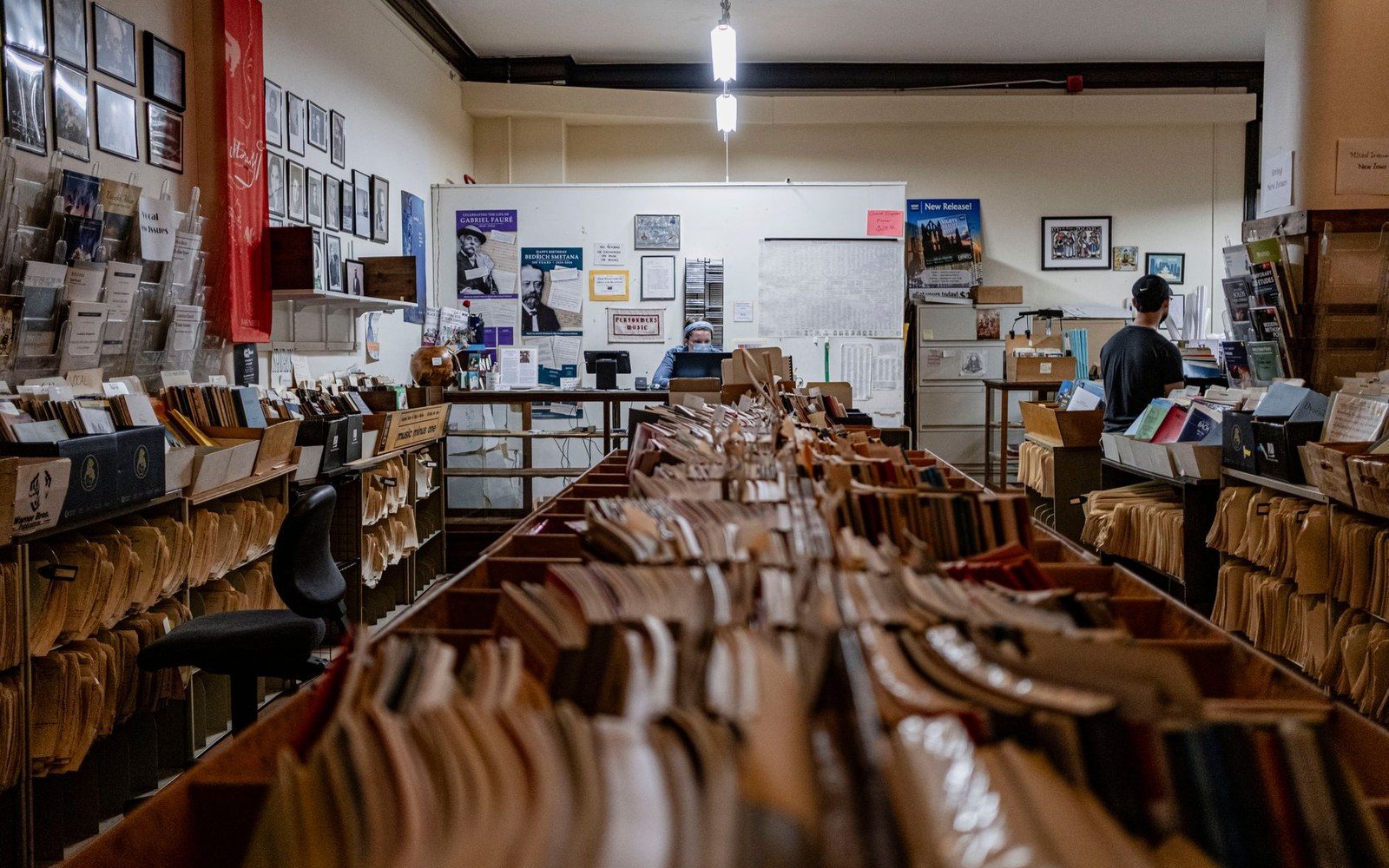
A plan chest holds prints flat and unfolded, which is why a sheet pulled in 1805 still lies straight.
Photo: Sydney Sang / Pexels
The Association of American Editorial Cartoonists had long defined the field in terms of publication in a newspaper or news site, but the animated cartoon sat awkwardly against criteria built around the static image. A single-panel drawing can be taken in at a glance; an animated piece controls the viewer's time, manages pace, and can hold a beat for comic or damning effect. The argument does not land at once — it is delivered, line by line, frame by frame, with the cartoonist deciding when the reader arrives at the point. That degree of temporal control is closer to a stand-up comedian's timing than to anything William Hogarth could arrange on a copper plate.
The technical machinery behind Telnaes's animated cartoons is neither cinematography nor illustration in the traditional sense. The drawings are made digitally, and the movement is spare — enough motion to shift meaning, not so much as to dissolve the essential character of the drawn line. The economy that defines editorial cartooning on paper survives into the animated form: nothing moves that does not need to move.
Chronology
- 2001Ann Telnaes awarded the Pulitzer Prize for Editorial Cartooning, recognising her print-syndicated work, years before an animated cartoonist won the prize
What animation adds, most precisely, is irony that builds. A static cartoon delivers its contradiction all at once; an animated cartoon can walk the viewer toward it, letting the setup establish itself before the image dismantles its own premise. That capacity to withhold, then reveal, gives the animated editorial cartoon a rhetorical register that the fixed image cannot quite achieve — and one that Telnaes has used with particular sharpness on questions of political hypocrisy, where the gap between stated position and evident behaviour is exactly the kind of thing that benefits from being shown in sequence.
The form remains a minority practice, but it now has a Pulitzer to mark its arrival.